The American Colonies: From Settlement to Independence
R. C. Simmons

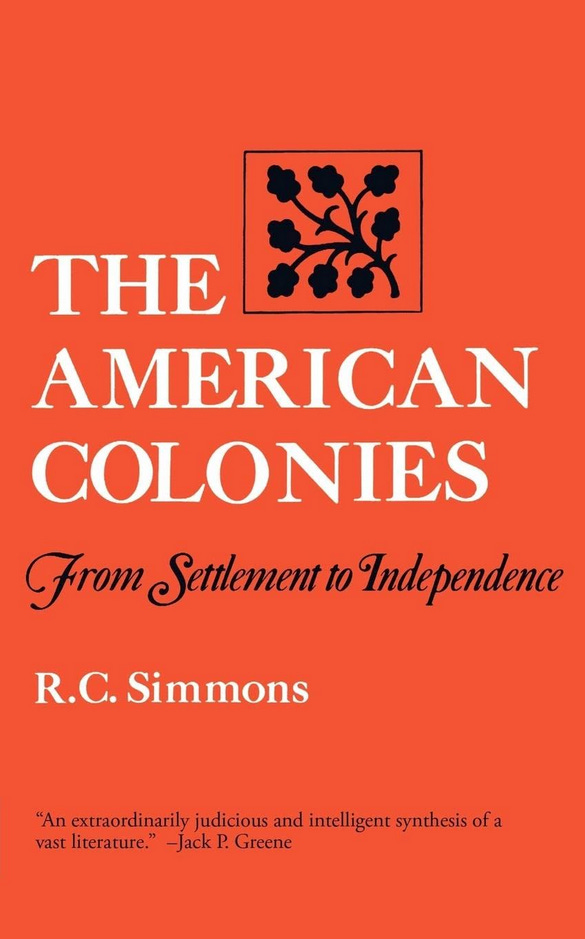
Leave it to a Brit to write a dense, compact, and fact-focused history of the North American English colonies from founding to independence. Many readers would call this book dry, and they’re probably right. The writing isn’t always clear, and is rarely imaginative. Balanced against difficulties with readability is the helpfully ruthless condensation of a vast academic literature into a relatively short and balanced analysis of the colonies, covering everything from economics to social structures to religion to politics. Readers who plow through to the end won’t be inspired by the prose, but they might climb a rung in their understanding of the seeds from which sprung the United States of America.
What did I learn? Although Simmons doesn’t draw this conclusion in detail, one thing that struck me in taking a stratospheric flight over this period was the intermittent recurrence of political violence against property. Attacks against the homes, goods, and persons of those identified as oppressors, physical violence for the sake of achieving political and economic ends against “aristocratic” or “tyrannical” overlords, are themes that surface repeatedly. The Revolution itself is certainly the most smack-you-in-the-face obvious example of this, but the alert reader will note similar if smaller slaps and punches throughout colonial history. If nothing else, it’s thought-provoking that violence against property is a tool Americans have from the beginning had in their toolbox of justice when they feel oppressed and suppressed. Whether right or wrong, the fact that this response appears baked into the American pie does lend an intriguing aroma to eruptions of social unrest throughout the course of American history, from the very beginnings right up to the present day.
Author: R. C. Simmons
Genres: Nonfiction, History, American History