On War
Carl von Clausewitz

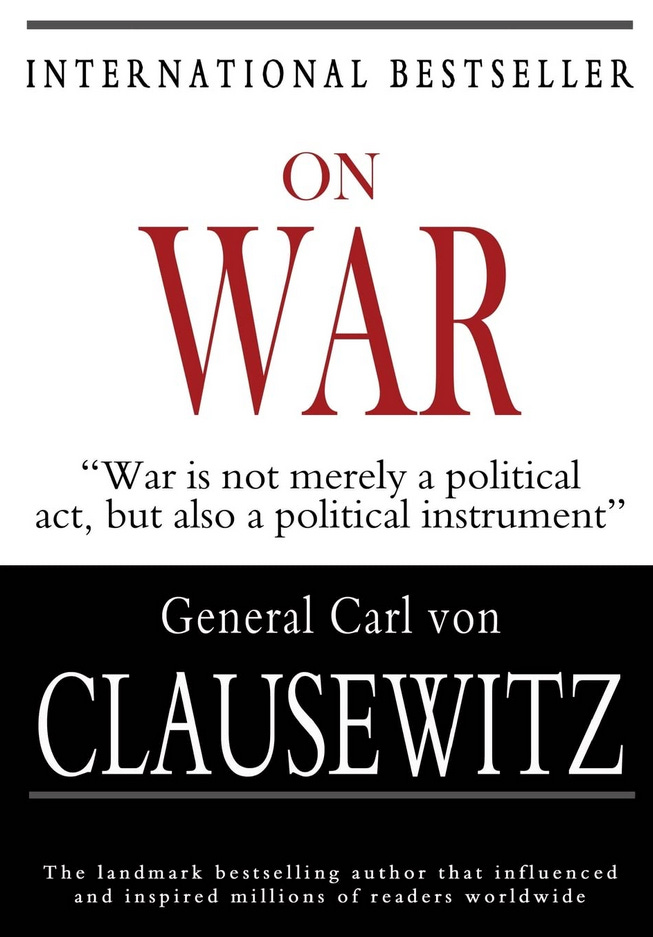
If this classic, foundational text of modern Western military theory has anything to teach us, it’s that we all live in Napoleon’s world. Before the rise of the Corsican corporal, war between Europe’s monarchies was more often than not a wrestling match between dynasties over chunks of territory that were just as likely to be traded back during peace negotiations as retained for exploitation until the next war.
The levée en masse of the French Revolution gave Napoleon the human means to wage a total war of extinction on Europe’s dynastic houses. By the time the monarchs finally brought him down, the lessons he had taught the kings had been well learned. Clausewitz represents the most significant attempt to digest those lessons into a manual of strategic generalship that still finds a place in modern studies of war.
Perhaps the most important of Clausewitz’s ideas is the need to wage war in subordination to clearly defined ends. War is not a pastime of princes but the overflow of state policy. The strategic general shapes the battlefield to achieve that policy, and will resist the push or pull of frictions that might lure him toward any aim but the destruction of the enemy’s forces, in order to bring about the desired policy in the peace. This sort of goal-oriented thinking is crucial in war, but it strikes me that you could do worse than adapt this insight to your approach to your own life.
Author: Carl von Clausewitz, J. J. Graham (Translator)
Genres: Nonfiction, Philosophy, Military Theory